CHAMBER BLOG

The Greater Bethesda Chamber of Commerce
  • Who We Are
    • Mission & Strategic Plan
    • Board of Directors
    • Our Team
  • Membership & Benefits
    • Join The Chamber
    • Benefits of Membership
    • Membership Directory
    • Member2Member Discounts
    • Advertising, Annual Sponsorships & Forum Club
    • Committees & Groups
    • Member Login
  • Calendar & Events
    • Calendar
    • 100th Anniversary Celebration
    • Sponsor, Host & Advertise
    • Annual Events
  • Community & Advocacy
    • Advocacy
    • Community Resources
    • Business in Greater Bethesda
  • EMPLOYEE RESOURCES
  • Blog
  • Connect With Us
    • Contact Us
    • ChamberWatch
    • Social Media

Giving Tuesday and Why it Matters More in 2025

12/2/2025

0 Comments

 
​Pete Kimbis, Attorney and Managing Director of PKC LLC
Picture


​Giving Tuesday, now in its fourteenth year, has become a pivotal day for the health of the nonprofit sector. According to GivingTuesday.org, donors showed up in large numbers in 2024, with a reported $3.6 billion given, a 16% increase over 2023. This Giving Tuesday, on December 2, 2025, presents the Bethesda Business Community with a unique opportunity to invest in local stability and community through support of local businesses dedicated to social good.

According to the U.S. Bureau of Labor Statistics, the nonprofit sector employs over 12.8 million people nationwide across more than 300,000 organizations, making up 9.9% of all private-sector jobs. Our geographically adjacent neighbor, Washington, D.C., where many Bethesda residents work, records the highest proportion of nonprofit jobs relative to total employment at 25%.

The sector is essential for a healthy and functioning society, providing vital services in areas such as housing, scientific advancement, food security, protection from violence, economic revitalization, and the preservation of species and habitats.

The nonprofit landscape in 2025 is challenging, marked by economic pressures that are forcing a painful but necessary restructuring across the sector. Unlike the private sector, where profits can be redirected or product lines adapted, nonprofits are governed by volunteer boards and cannot divest earnings to shareholders. They are currently entering an adapt or fail environment that mirrors fierce market competition.

This reality foreshadows mergers and a focused narrowing of services, forcing organizations to specialize in what they do best. For donors, this specialization may be perceived as a long-overdue shift towards increased efficiency and effectiveness.

However, it's essential to note that this shift toward specialization is not driven by consumer demand, but rather a survival mechanism. This evolution is within a sector that employs a large workforce, disproportionately represented by women compared to other industries, and delivers essential government-like functions.

Currently, Montgomery County nonprofits are reporting significant stressors, including a dramatic increase in demand for basic survival services due to the high cost of living, economic instability, and recent disruptions in the federal government. Many local nonprofits are struggling to meet the basic needs of an increasingly financially vulnerable population as they face reductions in government funding and the elimination of key agencies. These organizations often operate similarly to families living paycheck to paycheck.

As our region navigates ongoing economic shifts, supporting nonprofit organizations is not just a charitable act for business owners; it's a strategic investment in the workforce and financial health of Montgomery County.

Support from the local business community is meaningful and necessary. There are several ways for businesses to get involved: through corporate sponsorship, organizing team-building volunteer days, or making direct donations. For example, donations to Nourishing Bethesda, an organization selected by the Greater Bethesda Chamber of Commerce as a community partner, help ensure that the 7,000+ neighbors it serves each month remain food secure and ready to contribute to our shared economy.
​
And regardless of political or ideological affiliations, at the core of our community lies a shared desire for similar goals: healthy families, equality, opportunity, and prosperity. Giving Tuesday, on December 2, 2025, is a way to divest from the discord of politics and invest in something we can all agree on: helping those who need a hand or a safe place when they have nowhere else to turn. It feels good and helps ensure vital organizations continue their good work. On a personal note, I have often not appreciated the value of what I've had until it was gone. A gentle reminder that collectively, we have a lot to be thankful for, and that our local non-profits play a significant role in shaping this treasured community.

0 Comments

Transforming Menopause and Perimenopause Care: A Critical Gap in Primary Healthcare

9/22/2025

0 Comments

 
Guest Blog by Dr. Nadia Sirdar, MD, MPH,  Bethesda Modern Primary Care
Picture
The menopause transition affects half the global population, yet women consistently encounter inadequate healthcare during this major life stage. More than 50% of women experience disruptive symptoms that fundamentally impact their quality of life, but systemic gaps in medical training and care delivery leave millions underserved. The solution requires a comprehensive overhaul: better healthcare provider education, standardized care protocols, improved individual risk assessment, and consistent implementation of proven treatments.
 
The Healthcare Education Crisis
A profound educational deficit exists within medical training systems worldwide. Menopause education remains absent from most medical school curricula and residency programs, creating inadequate care. Research shows that 96% of women report significant life disruption from menopause-related changes—physical, psychological, social, and sexual—yet most never seek treatment, largely because healthcare providers lack sufficient preparation to address their needs.

This knowledge gap represents more than an educational oversight; it's a systematic failure to prepare healthcare professionals for treating half their patient population during a life transition spanning potentially decades.
 
Provider Education: Building Clinical Competency
Healthcare provider education must extend beyond gynecologists to include all primary care physicians, nurse practitioners, and mental health professionals who treat midlife women.
Essential competencies include understanding the complex hormonal fluctuations occurring years before actual menopause—when estrogen levels can surge while also creating deficiency symptoms—mastering evidence-based treatment approaches for both hormonal and non-hormonal interventions, and developing risk assessment capabilities for cardiovascular disease, breast cancer, and osteoporosis.

This educational transformation requires institutional commitment to curricular reform, continuing medical education requirements, and professional society leadership in establishing competency standards.

Standardized Care Protocols: Ensuring Consistency
Healthcare systems must implement standardized care pathways to eliminate the current lottery of care quality that women experience based solely on their provider's individual knowledge and interest. Effective protocols include systematic symptom documentation using validated assessment tools like the Menopause Rating Scale, comprehensive health screening that uses menopause consultations to address cardiovascular risk, bone health, and cancer prevention, and evidence-based treatment guidelines that help clinicians through appropriate interventions from lifestyle modifications to pharmaceutical options.
​
These standardized approaches ensure that every woman receives consistent, high-quality care regardless of geographic location or provider variability.
 
Individualized Risk Assessment: Precision in Treatment Decisions
Careful risk assessment forms the foundation of personalized menopause care. This involves comprehensive cardiovascular evaluation, recognizing that hormone therapy benefits and risks vary significantly based on timing—with optimal safety profiles for women under 60 or within 10 years of menopause onset—thorough bone health assessment including early identification of osteoporosis risk factors and appropriate screening protocols, and careful evaluation of symptom impact on individual quality of life, acknowledging that severe symptoms may justify accepting calculated treatment risks.

This personalized approach moves beyond one-size-fits-all recommendations to acknowledge the complex relationship between individual health profiles, symptom severity, and personal preferences.
 
Evidence-Based Treatment Implementation
Clinical practice must consistently reflect current scientific evidence. For women under 60 or within 10 years of menopause experiencing bothersome hot flashes without contraindications, hormone therapy represents the gold standard treatment with established effectiveness and acceptable risk profiles. Treatment principles emphasize collaborative decision-making that empowers women with comprehensive information to make informed choices, multidisciplinary care coordination involving primary care, gynecology, cardiology, and mental health specialists as needed, and systematic monitoring with regular reassessment of symptoms, treatment effectiveness, and evolving risk factors.
 
Pathways to Transformation
Healthcare consumers and advocates can drive change by demanding provider accountability through questions about menopause training and treatment approaches during consultations, supporting healthcare institutions that prioritize women's health education and comprehensive midlife care, and advocating for insurance coverage of evidence-based menopause treatments and specialist consultations.

Professional resources for continued learning include The Menopause Society, Mayo Clinic's continuing education programs, and Endocrine Society clinical guidelines.
 
The Need for Change
The current state of menopause care represents a significant healthcare equity issue affecting millions of women worldwide. Transforming this landscape requires systematic change across medical education, clinical practice standards, and healthcare delivery models. The four areas—provider education, standardized protocols, individualized risk assessment, and evidence-based treatment—provide a roadmap for creating healthcare systems that truly serve women's needs during this major life transition.
The opportunity exists today to fundamentally improve healthcare outcomes, quality of life, and medical experiences for countless women. The question remains whether healthcare systems, policymakers, and society will prioritize this transformation with the urgency and resources it demands.

Essential Resources:
  • The Menopause Society Professional Resources
  • Mayo Clinic Menopause Education
  • Endocrine Society Treatment Guidelines

0 Comments

15 Lessons to Share as a Women-Owned Business

10/21/2024

0 Comments

 
Guest Blog by Rayetta Michael, Help in the Home
Picture
We love to see others grow in every area of their lives, and we can’t wait to see you succeed too.  Lessons are best learned when shared, so we are going to reveal our top 15 tips that got us to where we are today. It’s time to realize your value!

1. Servant leadership is the only way.
Our organizational chart places our clients at the top, staff below clients, leadership below staff and co-founders at the bottom. We don’t see how we could do what we do with excellence any other way.
2. Hire people who are smarter than you.
We are constantly patting ourselves on the back for hiring highly-skilled individuals. We learn something everyday from the amazing people who work at Help in the Home.
3. Foster collaboration instead of competition.
The metro DC area can be a breeding ground for competition. We have found that we thrive better on collaboration both internally and externally. 
4. Hire people with heart.
Working with individuals and families struggling with complex mental illness is really hard work. You have to love it to be good at it.
5. Running a business is a marathon, not a sprint.
Pacing yourself and remaining flexible in how you approach each new season of business is a lesson that takes time to learn but is key to avoiding burn out !
6. Have a growth mindset.
In order to maintain standards of excellence, you have to be willing to change and learn. That never stops and we instill this mindset with every person that joins our team. 
7. Start with gratitude.
We start our days focused on gratitude. We’ve found it’s the best way to stay grounded throughout the entire day and especially important on the hard days.
 8. Self-care is essential.
You can’t fill anyone else’s cup unless you’ve filled your own first. Take good care of yourself and it will reflect in how you show up for your clients and staff.
9. Vulnerability is strength.
It is common in our society for vulnerability to be viewed as weakness. However, we’ve found that incredible strength and growth comes from exposing and sharing our vulnerabilities with others. 
10. Trust, but verify.
It’s important to hire people that you trust, while maintaining a system of checks and balances that holds everyone accountable. This helps with ensuring the standard of excellence we strive for.
11. Don’t manage, lead.
When you hire the right people, they don’t need you to micro-manage their time. Lead by giving people the tools and support they need to be successful.
12. Diversity, equality and inclusion improves everything.
Full stop.
13. Presence is a best practice.
Be present.  Truly showing up for yourself, with your clients and staff is where the magic happens.  It takes practice!
14. Strive for excellence, not perfection.
Perfection is unattainable. Know that there are opportunities lying within mistakes. Embrace the struggle and see it as a gift.  
15. Infuse joy.
This is at the very core of Help in the Home’s mission. Take every opportunity you can to celebrate victories, no matter how small they may seem. Even in the most difficult times.

We wouldn’t be where we are today if we had worried about every little thing that was thrown our way. This is your reminder to not sweat the small stuff! You will find joy when you surround yourself with growth-minded people who are willing to have your back while stretching you to be your best. We hope you have gleaned some of the wisdom we have acquired throughout this journey to make your own path a little smoother.
​
About Help in the Home: Help in the Home strives to be known for their passionate approach and guiding motivation to add value to the communities we’re in. They believe in the importance of creating an inclusive community that provides housing and therapeutic support for people with severe mental illness– one where warmth, care, and support are present – is priceless. Co-founders Stacy or Rayetta would love to connect with you - e-mail [email protected] to learn more about their business model and how you can work together.
0 Comments

What Every Business Owner Should Know Before Divorce:  5 Considerations

10/7/2024

0 Comments

 
Guest Blog by Lloyd Malech
Picture
Divorce, whether amicable or bitter, is no easy transition for anyone. It involves significant changes and upheaval to routines, expectations, and living arrangements. Business owners' source of income is more than a paycheck – it is an important asset with many moving parts that the divorce process may directly impact. When a business owner contemplates divorce, the process can become particularly complex. Here are five critical considerations to bear in mind:

1. Preserve Key Documents
A business owner is responsible for preserving key documents in the ordinary course of business. However, it is particularly urgent to maintain clear, thorough, and up-to-date records of all business operations, financials, contracts, and ownership documents in the context of a potential divorce. These documents may play a crucial role in determining business value and ownership rights during divorce proceedings. Some key documents to include are:
  • Tax Returns
  • Annual filings with federal, state, and local governments
  • Organizational documents for corporations, LLCs, and other business entities

2. Prove Separate Property
If the business was started before the marriage or inherited, it may be classified as separate property, which means the other spouse is not interested in the business. Clear documentation is crucial to prove that the business began as separate property and was not commingled with marital assets, such as shared bank accounts or using marital funds to grow the business. Creating and maintaining a paper trail to demonstrate that the business has always been kept separate from the marital property will prevent successful claims by the other spouse.

3. Notify Business Partners
Divorce can significantly impact business operations, especially if the spouse has a stake in the business or if the divorce could lead to asset division that affects the company’s liquidity. It is not just good practice, but essential to notify business partners (if any) and discuss how the business will be handled. This open communication is crucial to ensure continuity and protect the company’s stability. Many business entities place a fiduciary duty on co-owners to disclose events that might cause major impact on the business operations.

4. Valuing the Business for Marital Estate
If a business is not separate property, the other spouse has a right to include the value of the business in the marital estate for purposes of fair division. An accurate and fair business valuation can be conducted by business valuation experts who can assess the business’s worth, considering factors like revenue, assets, liabilities, and market conditions. The valuation is often a point of contention in divorce, and this process can help determine if the business will be sold, divided, or retained by one spouse.

5. Planning for Post-Divorce Business Structure
The divorce trial or settlement may impact the business structure. If the business is shared, partners may need to renegotiate roles, buy out the other spouse, or prepare for changes in ownership and control. Planning ahead for this transition ensures the business can continue functioning smoothly.
Depending on a business's type, size, and structure, when an owner contemplates divorce, it can have significant consequences. Confer with an attorney with experience in family law and an understanding of property interests to ensure that the business is as protected as possible to maintain value and minimize disruption.
 
With over 25 years of experience, we are committed to providing excellent service to our clients. Our accolades include the 2024 Family Law American Association of Attorney Advocates recognition, being a finalist in the 2024 Best of Bethesda Readers’ Pick for Best Family Law Practitioner, and winning the same award in 2022. We’ve also been honored with the Lawyers of Distinction Award for Excellence in Divorce and Family Law for the past five consecutive years. At Malech Law, we approach every case with respect, empathy, and a dedication to excellence. Contact us today for professional legal assistance.
Visit Malechlaw.com or call (202) 441-2107.
​
0 Comments

GBCC CELEBRATES NATIONAL BLACK BUSINESS MONTH

8/1/2024

0 Comments

 
Guest Blog by: ​Verelyn Gibbs Watson, GBCC Chair Elect
Owner, Nothing Bundt Cakes Bethesda
Picture
Did you know that August is National Black Business Month? The Greater Bethesda Chamber of Commerce is proud to celebrate and honor the important contributions Black-Owned Businesses make nationally, and locally within our community.

While historically, Black entrepreneurship in America can be traced back centuries to the 1700’s, the origins of the official National Black Business Month designation came about in 2004. John William Templeton and Frederick E. Jordan, two Black entrepreneurs, wanted to help empower minority business owners, who face unique challenges when it comes to starting and growing their businesses. 

Although throughout our nation’s history, Black entrepreneurship has continued to grow, that growth has been fraught with obstacles along the way. Ironically, systemic racism and the segregation policies of the time, actually served as catalysts for the development and growth of Black owned businesses. Black entrepreneurs realized the need to create access to goods and services they were denied in mainstream marketplaces. Alas, this success was often met with tragic outcomes such as the 1921 massacre that erased the thriving Black business district known as Black Wall Street in Tulsa, Oklahoma.

Even the beginnings of Black American entrepreneurship were unnecessarily hampered by fear and concerns centered around Black freedom and financial independence. As an example, after enslaved people were emancipated, many grew and sold watermelon to earn a living and support their families. However, propaganda aimed at reducing demand for the fruit by creating negative connotations about Blacks and their “love” of watermelon, succeeded in creating a negative stigma about the fruit, which still exists today in some communities of color.

The obstacles that Black businesses face today may not be as overt, but make no mistake that hindrances such as lack of access to capital/ higher cost of capital or dealing with bias from vendors and/or customers do come into play and have an impact. Even those that get beyond the basic hurdles, may then have to navigate the “positioning” of their business in the marketplace to avoid confusion that may arise. (Just because the business owner is Black, does not mean the business is only for Black consumers.)

Anyone doubting the impact of these issues need look no further than the US Census Bureau whose data helps confirm these disparities. According to their 2021 report, even though Blacks make up approximately 14.2% of the US population – Black businesses are only 2.3% of US businesses.
National Black Business Month is a time to increase our awareness of these issues, but more importantly, to use that awareness to help celebrate and promote Black-Owned businesses that are succeeding, despite the odds.

So how can you help commemorate and celebrate National Black Business Month?  An easy way is to start by visiting or promoting local Bethesda businesses owned by Black entrepreneurs.
Here are a few Black-Owned GBCC member businesses to help you start the celebration!
  • Fearless Chix
  • ItsMcube
  • J L Terrell Construction
  • LeBonDay
  • Liquid Intrusion Brewing Co
  • Marble Title
  • Made by Mo-nae
  • M.C. Thomas & Associates, Inc.
  • New American Restoration
  • Nothing Bundt Cakes - Bethesda
  • The Wine Concierge
0 Comments

Are you looking for skilled workers ready to work?

11/13/2023

0 Comments

 
Kathy Stevens, Executive Director, MCAEL &
​Carla Young, Director of Membership and Community Relations, The Greater Bethesda Chamber of Commerce
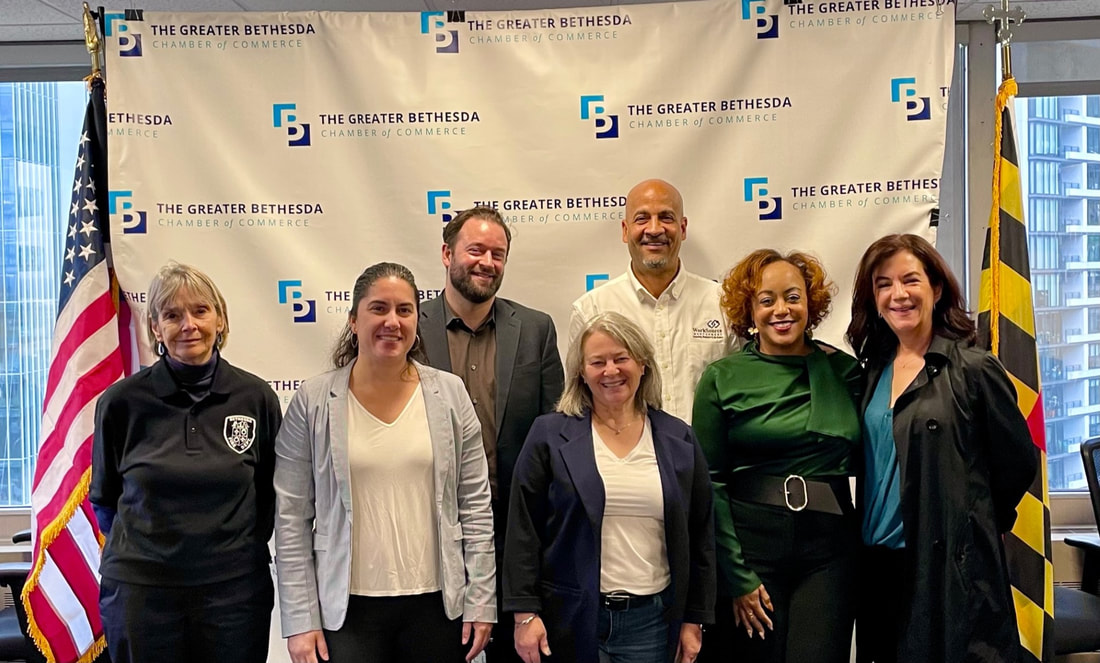
If so, you missed the opportunity to learn about state and county resources when The Greater Bethesda Chamber of Commerce hosted its quarterly Cultural Roundtable Group with special guest Joana Winningham of the MD Division of Workforce Development & Adult Learning. 
​

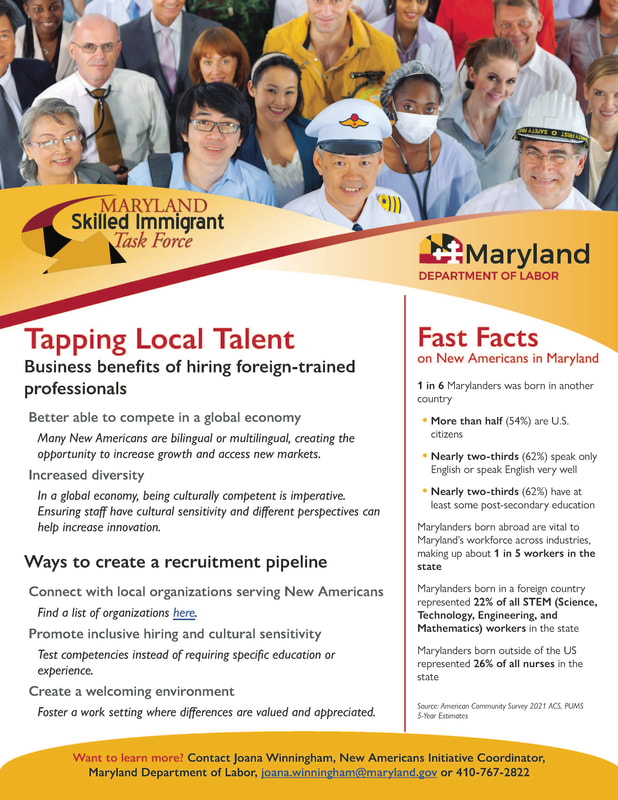
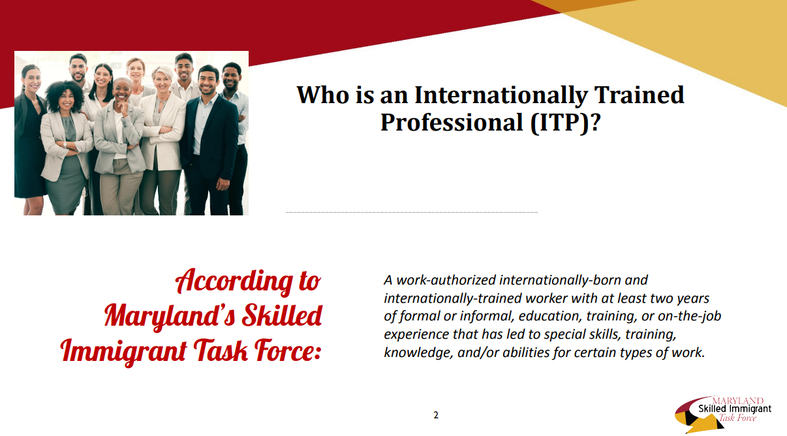
Joanna heads up the Skilled Immigrant Task Force, a 100+ member strong group around the state including fellow Chamber members like MCAEL and WorkSource Montgomery. The Maryland Skilled Immigrants Task Force (SITF) is a consortium of stakeholders that seek to leverage skills that foreign-trained professionals bring to the United States to meet local job market demand.
 
In Montgomery County, the foreign-born population is 32% of our county population and we have thousands of neighbors who are ready, willing, skilled, and able to meet the needs of local employers---if only they can get connected with you.
 
While we know that our unemployment rate is low, we also hear from Chamber member businesses that they have challenges finding workers to fill their needs.
 
To access these resources, go to https://www.dllr.state.md.us/employment/skilledimmigrant.shtml
 
And feel free to reach out to Joana directly to learn more about SITF at  [email protected] 410-767-2822

Stay tuned to the Chamber for more Cultural Roundtable Group topics surrounding issues that impact our business community.
Picture
Picture
Do you have an idea for a future GBCC Cultural Roundtable topic? 

Contact Committee Staff Liasson
Carla Young
[email protected]
Picture

0 Comments

The Scotland Juneteenth Heritage Festival

6/16/2023

0 Comments

 
Picture
The Scotland community, here in Bethesda, holds a rich history that dates back many generations. The roots of this African American enclave can be traced to a time when racial segregation and discrimination were prevalent in the United States.

The Scotland community provided a safe haven for African American families who sought to establish a prosperous and supportive neighborhood. Despite facing various challenges and limited resources, the residents of Scotland built a tight-knit community where they could celebrate their culture, traditions, and history.

One of many significant events in the history of the Scotland community was the “Save Our Scotland” Campaign, launched in the 1960’s as a collaboration between residents and Joyce B. Siegel, a Bethesda resident who became an advocate for preservation of the community, as development was rapidly threatening to erase Scotland.

The heart of Scotland has long been recognized as the Scotland AME Zion Church on Seven Locks Road. The church was hand-built between 1915 and 1924 by its congregants, many of whom lived in the Scotland community. Unfortunately, during the summer of 2019, a flood damaged the church building beyond use.

Thankfully, Scotland, as well as the greater Bethesda community, has created an opportunity to collaborate once again in the rebuilding of the historic church. The Scotland Juneteenth Heritage Festival, with events beginning June 17th, continuing through June 19th, will see all net proceeds benefit rebuilding, and festival proceeds from future years earmarked for other African American Causes in the region.  

Juneteenth commemorates the emancipation of enslaved African Americans in the United States. On June 19, 1865, Union soldiers arrived in Galveston, Texas, and announced that the Civil War had ended, and all slaves were now free. In recent years, the significance of Juneteenth has gained increased recognition and importance throughout the United States.

The inaugural Juneteenth celebration in the Scotland community marks a significant milestone in its history and ours. It serves as a reminder of the community's strength and determination to preserve and honor their heritage. It is a testament to the profound impact that a united community can have in creating a brighter and more inclusive future for all.
​
Learn more about how you can support and attend the Scotland Juneteenth Heritage Festival HERE.

0 Comments

Vibrancy in Bethesda

11/9/2020

1 Comment

 
Guest Blog by Brandan Stuckey, Bethesda Transportation Solutions

I’m not sure how we entered a space where the same few platitudes are thrown about, seemingly every other sentence. Counting how many times you see words like normalize, robust, engage, or deliverables, used in our corporate lexicon can lead to the most intense interoffice game of bingo this side of Cordell Ave. Words, are powerful. Words have meaning. Words have impact. And there’s nothing more impactful than hearing vibrancy in the context of downtown. Vibrancy is often used when speaking of outdoor spaces. However, its usage must become more than the latest platitude; Vibrancy has to become a call to action. For instance, Bethesda Urban Partnership answered the call to help by creating the Streetery, a broad collaborative effort to sustain businesses during the pandemic. That’s Vibrancy.

Read More
1 Comment

Current Concepts on Low Back Pain

10/19/2020

0 Comments

 
Guest blog by Rehab 2 Perform

While your lower back pain is certainly individual to you, it is important that you know many other individuals are also experiencing it. As Physical Therapists, it is the most common diagnosis we see at Rehab 2 Perform each year. ​
Picture

Read More
0 Comments

​Building and Leveraging Your Network to Self-Actualize

10/13/2020

0 Comments

 
Guest Blog by Bola Audena, Partner, MBA Growth Partners
 
Let’s share a moment of transparency: the journey and process of self-actualization is a wild ride! As a new business owner (we launched our Consulting Practice, MBA Growth Partners, a year and a half ago), I can personally attest that the path to accomplishing one’s dreams is not linear; it’s full of highs, lows, ebbs, and flows. And rather than seeing those ups and downs as negatives or positives, we have to think of them as mere twists and turns in the pathway. What I’ve learned in a year and half is that you have to embrace these twists and turns. And let’s face it, our stories wouldn’t be nearly as colorful and vivid without them, anyway!

Read More
0 Comments
<<Previous

    Welcome!

    Our Chamber Blog is designed to provide you information about The Chamber, our members, advocacy and legislative updates, and important business tools.

    Archives

    December 2025
    September 2025
    July 2025
    June 2025
    April 2025
    March 2025
    February 2025
    December 2024
    November 2024
    October 2024
    September 2024
    August 2024
    June 2024
    May 2024
    April 2024
    February 2024
    January 2024
    December 2023
    November 2023
    October 2023
    September 2023
    July 2023
    June 2023
    May 2023
    April 2023
    March 2023
    February 2023
    January 2023
    November 2022
    October 2022
    August 2022
    July 2022
    June 2022
    May 2022
    April 2022
    March 2022
    February 2022
    January 2022
    December 2021
    November 2021
    October 2021
    September 2021
    August 2021
    July 2021
    May 2021
    April 2021
    March 2021
    February 2021
    January 2021
    December 2020
    November 2020
    October 2020
    September 2020
    August 2020
    April 2020
    March 2020
    September 2019
    August 2019
    July 2019

    Categories

    All
    Advocacy
    Committees And Groups
    Community
    COVID
    Events
    Finance
    Goodwill Dinner
    Guest Blogger
    Health & Wellness
    Member Benefits
    Networking
    Professional Development

    RSS Feed


​​​Member Directory
Event Calendar

Become a Sponsor
​
BLOG
​Contact Us
Privacy Statement
AI Policy
Member Login
Picture
Copyright 2026 The Greater Bethesda
​Chamber of Commerce.  ​
​All Rights Reserved.


​Phone: (301) 652-4900
​​​[email protected] 
​7910 Woodmont Avenue, Suite 1204
​Bethesda, MD 20814
​

MemberClicks
  • Who We Are
    • Mission & Strategic Plan
    • Board of Directors
    • Our Team
  • Membership & Benefits
    • Join The Chamber
    • Benefits of Membership
    • Membership Directory
    • Member2Member Discounts
    • Advertising, Annual Sponsorships & Forum Club
    • Committees & Groups
    • Member Login
  • Calendar & Events
    • Calendar
    • 100th Anniversary Celebration
    • Sponsor, Host & Advertise
    • Annual Events
  • Community & Advocacy
    • Advocacy
    • Community Resources
    • Business in Greater Bethesda
  • EMPLOYEE RESOURCES
  • Blog
  • Connect With Us
    • Contact Us
    • ChamberWatch
    • Social Media